WHAT'S HOLDING YOU BACK?
STOP GUESSING.
See how you move. Understand what deserves attention. Then build the training around what we actually find.
A WORKOUT CANNOT ANSWER
THE WRONG QUESTION.
Mobility, control, side-to-side differences and training history can change the right next step. Copying a program skips the part where someone pays attention to you.
LOOK. LEARN. THEN LOAD.
Assessment is a coaching tool, not a diagnosis. We use it to inform priorities and revisit what is relevant over time.
Start with context.
Your goals, training history, limitations and daily demands matter as much as a single movement.
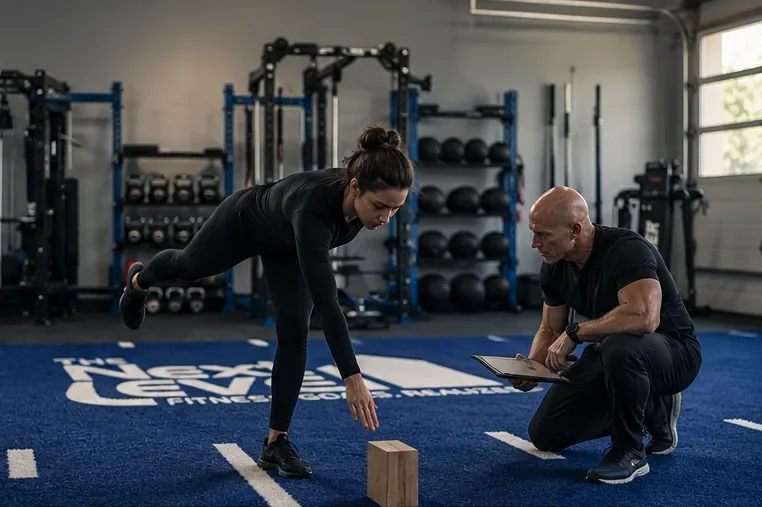
See how you move.
Look at useful patterns, available range, stability and differences between sides where relevant.
Set the priorities.
Translate those observations into choices about exercise, progression and what to practice.
Check the response.
Observe again as you train. The assessment helps guide the work; it does not end at day one.
AN ASSESSMENT IS NOT THE COACH.
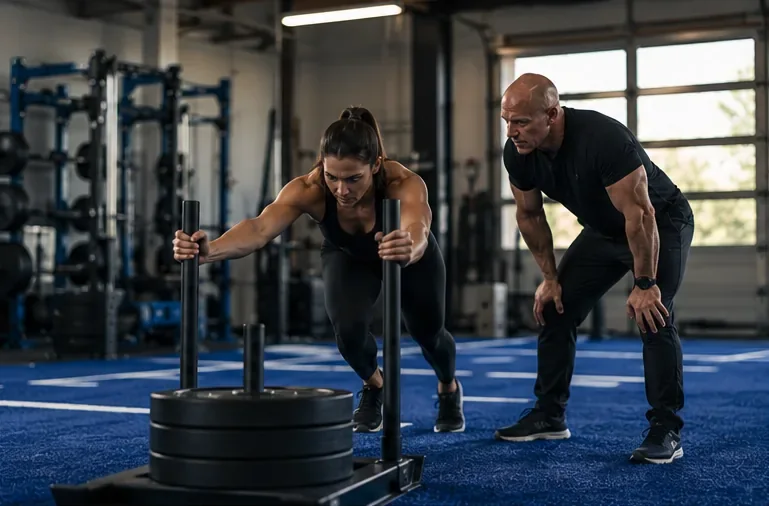
Michael brings nearly 30 years of coaching to the conversation. Movement information can reveal useful patterns, but a person still has to connect it to your history, your goal and the work you can actually do.
If you have pain or a medical concern, seek a qualified healthcare professional. This is not a medical evaluation or diagnosis.
Request a consultationWHAT COUNTS AS PROGRESS?
A useful comparison might be a repeatable movement, range or training task that relates to your goal. Your own baseline is the reference point; no one else’s numbers are substituted for yours.
Assessment findings do not identify or diagnose medical conditions.
Explore related coaching: one-to-one personal training · return-to-training coaching · assessment and reassessment.
QUESTIONS BEFORE YOU START.
Is this a medical assessment?
No. TNL uses movement assessment to guide coaching and training, not to diagnose injuries or conditions.
What if I have an old injury?
Tell Michael about it. Depending on your situation, medical clearance or collaboration with a qualified clinician may be appropriate.
Will I get a generic mobility routine?
The aim is to use your observations and goals to set relevant training priorities, not prescribe the same routine to everyone.
KNOW YOUR STARTING POINT.
Bring your questions, your training history and your goal. We will talk through a sensible next step.